News, guides & deep dives.
Product updates, hands-on tutorials and engineering insights from the Numivo team.
All articles
How to stand out as a human artist when AI can make 'good enough'
A practical guide to differentiating yourself as an artist in the age of generative AI, covering developing a point of view, mastering intention and craft, building a body of coherent work, and leaning into the specifically human qualities that 'good enough' output can never reach.
Read article
The real risks of AI for game artists, and how to stay indispensable in 2026
An honest look at what AI actually threatens in game art careers, what it doesn't, the legal and quality traps, and a concrete plan for staying indispensable by leaning into judgement, direction and the human skills that generated content can't replace.
Read article
How to get hired as an animator in 2026: skills, reel and standing out
A practical guide to landing an animation job in games or film in 2026, covering the fundamentals that still decide everything, the reel that gets interviews, how AI capture and procedural systems change what animators do, and how to stand out when tools can generate motion.
Read article
How to break into film and VFX as an environment artist in 2026
A practical guide to entering the film and VFX industry as an environment or matte/set artist in 2026: how film hiring differs from games, the reel that gets you noticed, the pipeline skills that matter, real-time's growing role, and how to position yourself.
Read article
How to land a games-industry job as an environment or level artist in 2026
A practical, honest guide to breaking into the games industry in environment and level art in 2026: what studios actually hire for, the portfolio that gets interviews, the skills in demand, networking that works, and how to stand out in a competitive market.
Read article
Level design fundamentals that never go out of style
The durable principles behind every good level, regardless of engine, genre or year, covering pacing and rhythm, readability and guidance, risk and reward, meaningful choice, and the loop of intention and playtesting, with why each one outlasts every tool and trend.
Read article
The level design trends shaping 2026, and which ones actually matter
A clear-eyed look at the level and environment design trends defining 2026, covering procedural and AI-assisted content, virtualized geometry and captured environments, systemic and reactive spaces, accessibility-first design, and how to adopt what's substance without chasing hype.
Read article
AI tools every environment artist should actually use in 2026
A grounded rundown of where AI genuinely helps environment and level artists in 2026, covering texturing, upscaling, retopology, tagging and search, reference and ideation, plus the honest limits and a workflow that uses AI as an accelerator without letting it flatten your work.
Read article
The level artist's 2026 toolkit: what to actually learn this year
A grounded map of the skills and tools a level and environment artist should prioritise in 2026, covering the durable fundamentals, the software worth your time, the newer tech worth watching, and how to sequence learning so you build real capability instead of tutorial hell.
Read article
Nanite and mesh shaders: how virtualized geometry actually works
A plain-language explanation of Nanite-style virtualized geometry and mesh shaders, covering why traditional LODs and the old vertex pipeline hit limits, how streaming clusters of triangles at pixel-scale detail works, and what it changes (and doesn't) for environment artists.
Read article
Virtual Shadow Maps and GPU-driven rendering, explained for artists
A plain-language explanation of Virtual Shadow Maps and GPU-driven rendering, covering why traditional shadow maps and CPU-submitted draw calls hit walls, how the modern approach fixes them, and what it means for how you build and budget environments.
Read article
Blender to Unreal and Unity in 2026: smooth live-link workflows
A practical guide to moving assets from Blender into Unreal Engine and Unity without pain, covering the transform and scale gotchas, material expectations, live-link/send-to-engine tools, collision and LOD setup, and how to build a round-trip that doesn't fight you.
Read articleProcedural and physics-based animation for games in 2026
A practical primer on procedural and physics-driven animation, covering motion matching, ragdoll and active ragdoll, procedural secondary motion and foot IK, and how to blend authored keyframes with runtime systems so characters react believably without exploding your animation budget.
Read article
Auto-retopology and auto-UV in 2026: when to trust the button
An honest look at automatic retopology and UV tools for game artists, covering how good they've actually got, where they save hours, where they still fail (deforming characters, hard-surface, seams), and a practical hybrid workflow that uses them without regret.
Read article
Real-time hair and fur grooming for games in 2026: strands vs. cards
A practical guide to real-time hair and fur for games, covering how strand-based grooming and hair cards differ, the performance trade-offs, LODing strands to cards, grooming workflow basics, and when each approach is the right call.
Read article
Substance smart materials in 2026: texturing that adapts to any mesh
A practical guide to smart materials and procedural texturing in Substance, covering what makes a material 'smart', how mesh maps drive wear and dirt automatically, building reusable material libraries, and where procedural texturing beats hand-painting.
Read article
Photogrammetry in 2026: from phone scan to game-ready asset
A practical photogrammetry workflow for game artists, covering how to shoot a good capture with just a phone, clean and retopologise the raw scan, bake detail to a game mesh, delight textures, and know where scanning beats modelling.
Read article
Houdini for indie environment artists: is it worth the climb?
An honest guide to Houdini for solo and small-team environment artists, covering what procedural really buys you, the steep learning curve, Houdini Engine and digital assets, where it beats hand-modelling, and how to start without drowning.
Read article
Getting game-ready assets out of Maya: the 2026 checklist
A practical checklist for exporting clean, game-ready assets from Maya, covering scale and units, freezing transforms, pivots, naming, UVs and smoothing, LODs, and the export settings that stop assets arriving broken in Unreal or Unity.
Read articleMarkerless and AI motion capture in 2026: how animators actually use it
A practical look at AI-driven markerless motion capture for animators, covering how video-to-animation works, what it's genuinely good at, where it still needs cleanup, retargeting to your rig, and how it changes an animation workflow without replacing craft.
Read articleOpenUSD for games and film in 2026: why the whole industry is standardizing on it
A clear explanation of OpenUSD for artists, covering what it is beyond a file format, layers and non-destructive composition, why studios adopt it for interchange, how it fits games versus film, and what an environment artist actually needs to know.
Read article
Blender Geometry Nodes for procedural environments: a practical starting point
A grounded introduction to Blender Geometry Nodes for environment art, covering what the node graph really does, scattering with instances, controlling randomness with seeds, driving detail with attributes, and where procedural stops and hand-work should start.
Read article
3D Gaussian Splatting for game environments in 2026: what it is and where it fits
A plain-language guide to 3D Gaussian Splatting for game artists, covering how it captures photoreal scenes, why splats aren't meshes, the real problems of using them in a game engine, mesh extraction, and where the technique genuinely fits a 2026 pipeline.
Read articleReproducible scattering: seeds, determinism and version-controlling a scattered level
Why procedural scatter needs to be deterministic, covering how seeds make randomness repeatable, why baking to native instances makes a scattered level diffable and mergeable, and how to keep a team's foliage from silently changing under source control.
Read article
Building a reference library that actually makes you a better artist
Why reference is a skill, not cheating, covering how to gather it with intent, what to collect beyond pretty pictures (materials, scale, wear, light), how to organize it so you actually use it, and how studying reference trains the eye that makes environments believable.
Read article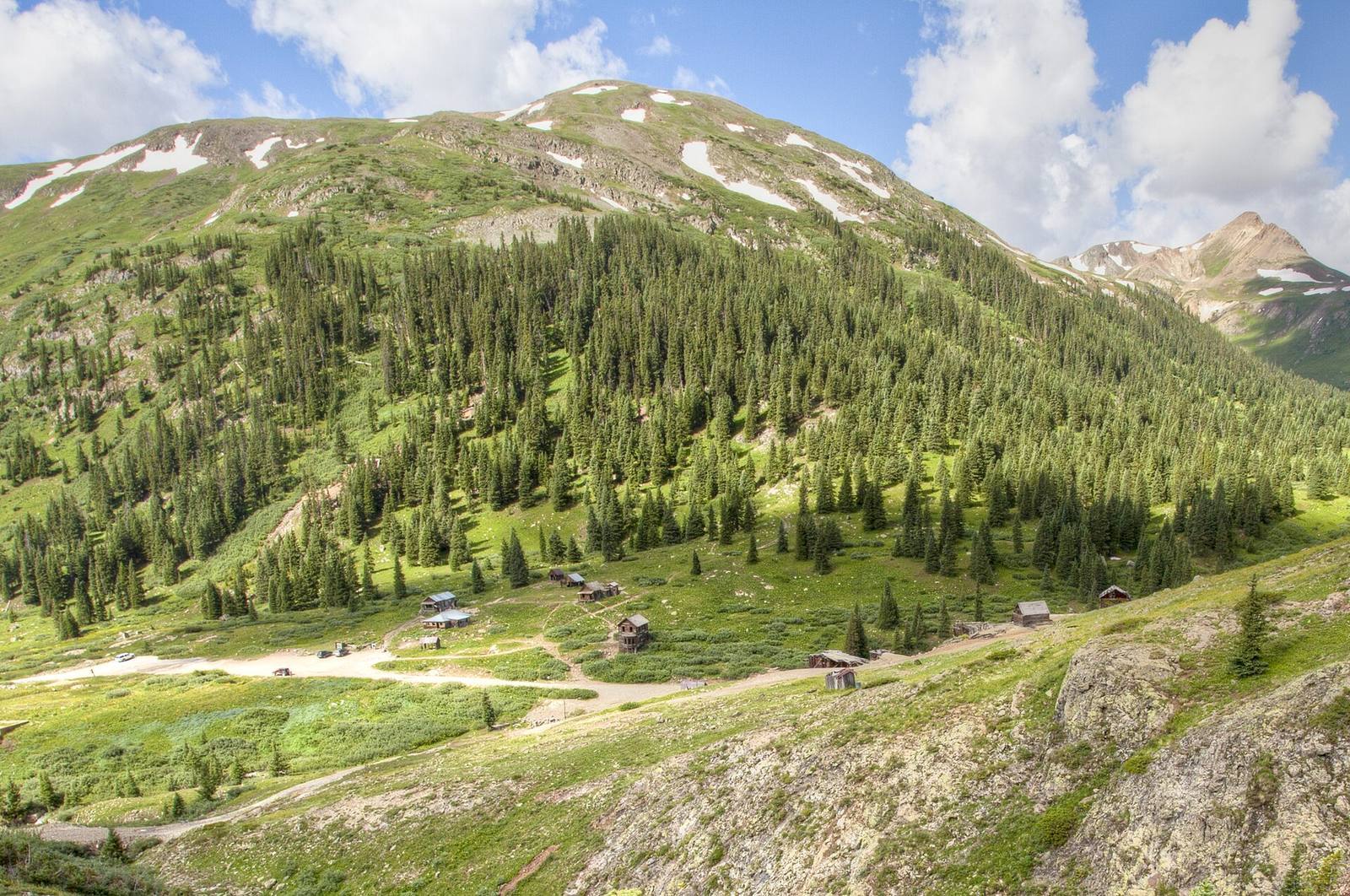
Dense forests without the framerate cliff: LODs, impostors and instancing
How to render thousands of trees at framerate: the LOD chain from full mesh to billboard, octahedral impostors that hold up from any angle, instancing and culling, and the wind and shading tricks that keep a baked forest from looking dead.
Read articleFrom blockout to portfolio: building an environment art portfolio that lands the job
What hiring artists and leads actually look for in an environment art portfolio, a few finished scenes over many props, breakdowns that show process, real-time in-engine work, scope discipline, and the presentation mistakes that quietly cost interviews.
Read article
Making your game run on a potato: optimizing environments for low-end PCs and Steam Deck
A practical playbook for hitting a low frame budget without gutting your art, covering where the frame time actually goes, overdraw and foliage, draw calls and instancing, LODs and cull distances, and the fixed-camera method for finding real regressions.
Read articleVertex painting for material blending: terrain and mesh transitions without visible seams
How vertex painting blends materials to kill visible seams, using the height-blend trick that beats linear alpha, painting mud into grass and moss onto rock, performance considerations, and where it fits alongside decals and tiling textures.
Read articleHow to make a small level feel huge: the spatial tricks AAA uses
Practical techniques to make a compact game space feel vast, including distant unreachable landmarks, forced perspective, scale anchors, atmospheric depth, verticality and framing, so you get a sense of scale without the cost of building a giant map.
Read articleLighting and colour mood: how a level makes players feel something
A practical guide to lighting game environments for emotion, covering key/fill/rim thinking, colour temperature, contrast as mood, motivated light sources, and using light to guide the eye, plus the values and checks that make a space feel intentional.
Read article
Texel density done right: one standard, enforced across a whole team
What texel density is, the pixels-per-centimetre values shipped games actually use, how to measure it with a checker texture, when to break the rule for hero assets, and how to enforce one standard so a team's environment reads as a single world.
Read articleComposition for game environments: leading the eye through 3D space
How to compose game environments so players look where you want, leading lines, framing, focal points, depth cues and the squint test, adapted from photography and film for a camera the player controls.
Read articleUnreal Engine 5 vs Unity for environment art in 2026: an honest comparison
A balanced, dimension-by-dimension comparison of Unreal Engine 5 and Unity for building game environments, covering terrain, foliage, lighting, performance, licensing and learning curve, with a decision table and the questions that actually settle the choice.
Read article
Taming a 100,000-asset library before it tames you
Naming conventions that sort themselves, folders versus tags, thumbnail pipelines, the duplicate policy and opportunistic migration, all part of a practical system for keeping a huge game asset library findable, and why search speed decides how varied your levels look.
Read article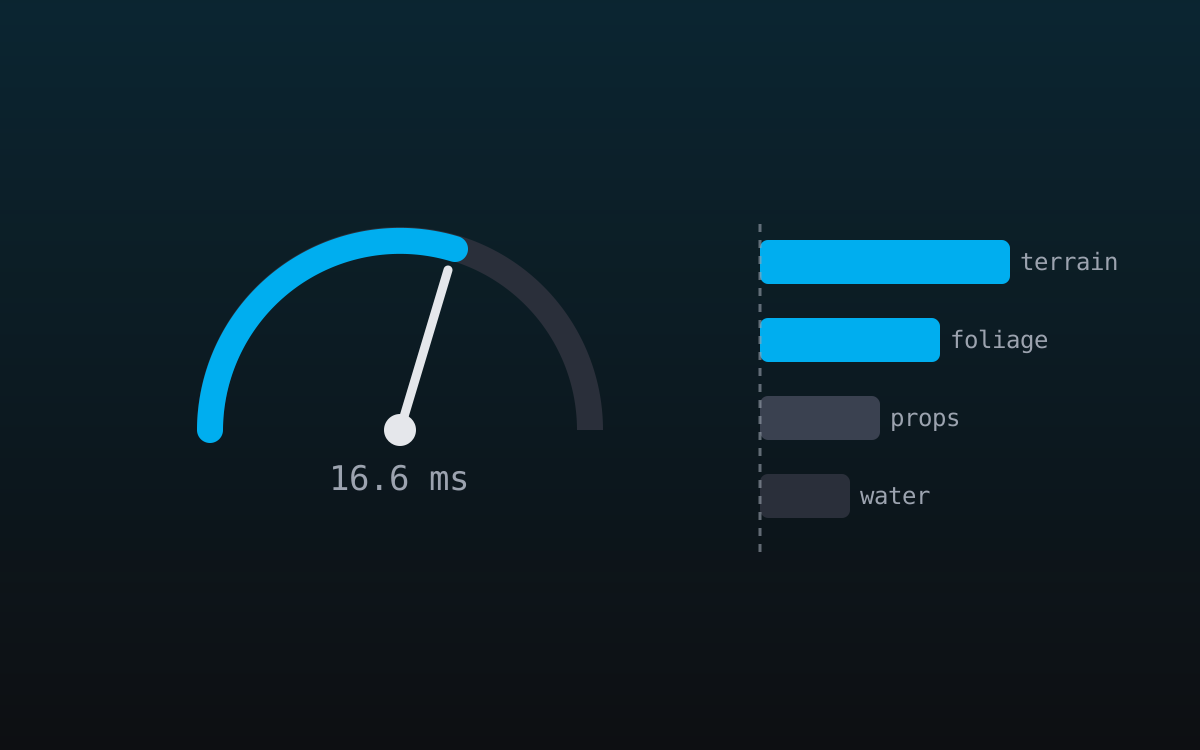
Performance budgets for environment art: numbers before beauty
How to set a performance budget for environment scenes: frame-time slices per system, draw call and memory ceilings, the three-camera measurement method, the review cadence, and the lever order to pull when a scene goes over.
Read article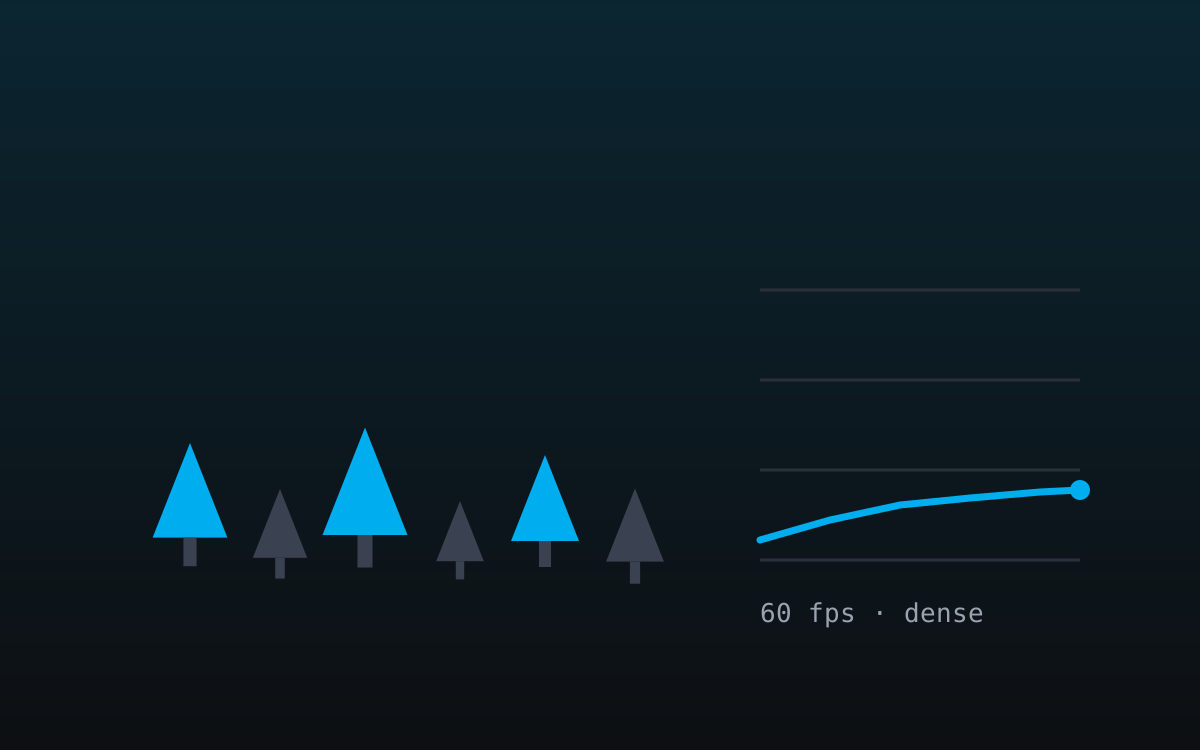
Dense foliage without the frame-rate bill: a practical guide
How to fill a scene with vegetation and keep it fast, instancing, cull distances, LOD strategy, shadow costs, overdraw, density placement and the fixed-camera profiling loop that proves each optimization actually paid off.
Read article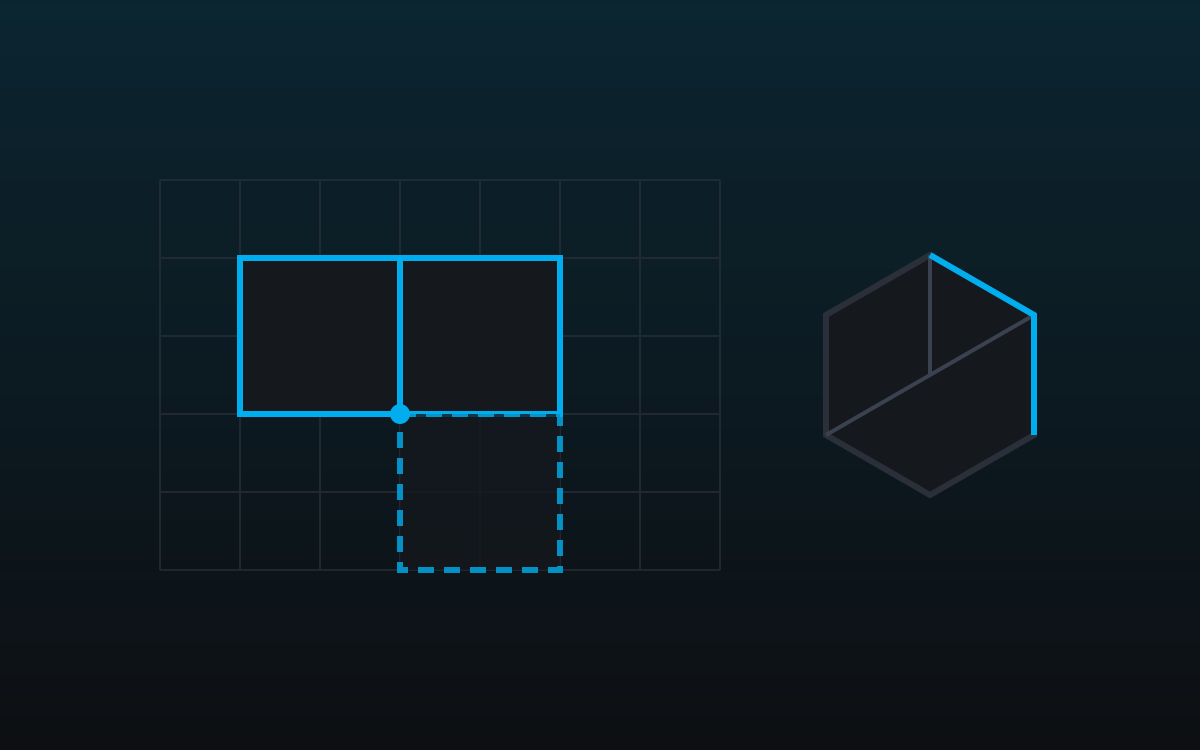
Modular kits that don't look modular: grid discipline, pivots and variation
How to design a modular environment kit, covering how to choose a grid and story height, the pivot convention that makes pieces snap, a 12-piece starter list, the variation techniques that hide repetition, and the non-square layouts that need tooling.
Read article
Guiding players without arrows: light, lines and landmarks
How level designers steer players without quest markers, covering the signal hierarchy from light to landmarks, composing the first frame of every space, landmark systems, breadcrumb chains, density steering and the playtest method that verifies it all.
Read article
Environmental storytelling that players actually read
Most environmental storytelling goes unnoticed. What players register in a two-second glance, the before-then-event dressing method, cause-and-effect proximity, lighting the key prop, and a worked example you can copy.
Read article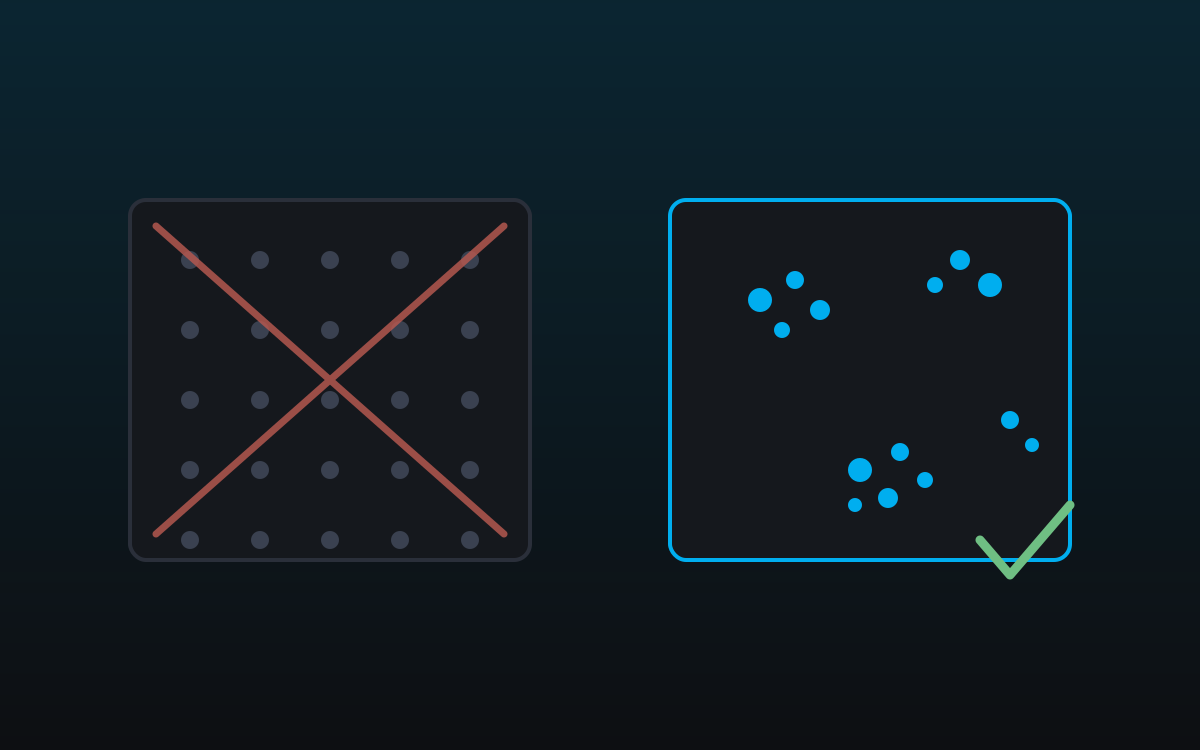
Why your scattered vegetation looks fake, and the five rules that fix it
Random scatter is not how nature works. Clustering, attract/avoid species relationships, edge gradients, structured size variation, and terrain logic form five rules that turn procedural placement into a believable ecosystem, with the numbers that make each one work.
Read articleThe Unreal Engine plugins worth installing in 2026: eleven that earn their slot
A short, honest list of Unreal Engine plugins that pull their weight in 2026, including MetaHuman, Datasmith, Niagara, Ultra Dynamic Sky, SpeedTree, Substance, Worldscape, EasyFog and more, with a plain test for whether a plugin belongs in your project.
Read articleLevel design tools that actually matter: the stack behind a finished space
A practical guide to the level design toolset, covering picking an engine, blockout and greybox tools, modelling and texturing, scatter and vegetation, measurement, and asset management, plus which tools are worth adding and which are just noise.
Read article
From greybox to gold: the pass order that keeps environments on schedule
The proven five-pass sequence for building game environments (blockout, macro, structure, set dressing, polish), with exit criteria, time budgets per pass, the vertical-slice trick, and the failure pattern each pass exists to prevent.
Read article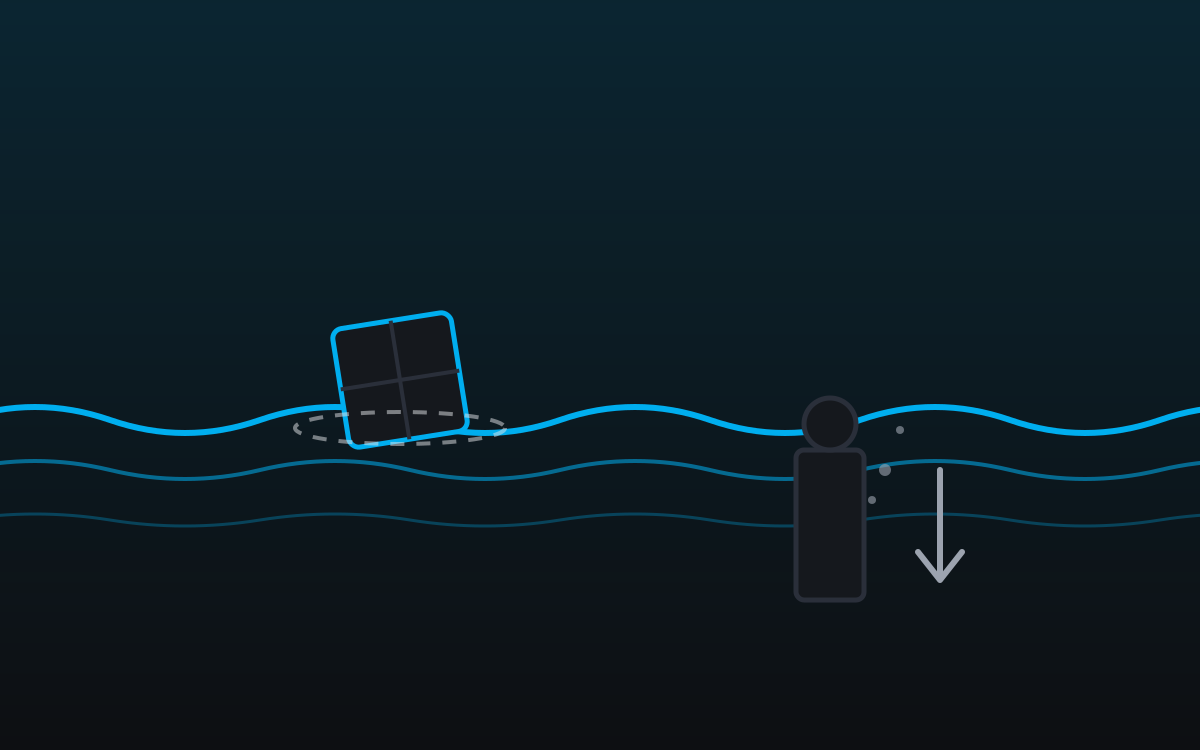
Water that behaves: a first look at Numivo Water
A first look at Numivo Water for Unreal Engine, covering film-quality ocean, lakes, underwater and caves judged against reference photographs, physically based light and foam, and Drop-a-Mesh buoyancy that floats or sinks any object with zero setup.
Read article
Designing playable water: depth, edges and the rules players learn
Water in games is a design material, not a backdrop: how color and motion encode depth and danger, why shorelines are composition lines, water as a pacing tool, cave and underwater spaces, and the consistency contract that keeps players trusting every pool.
Read article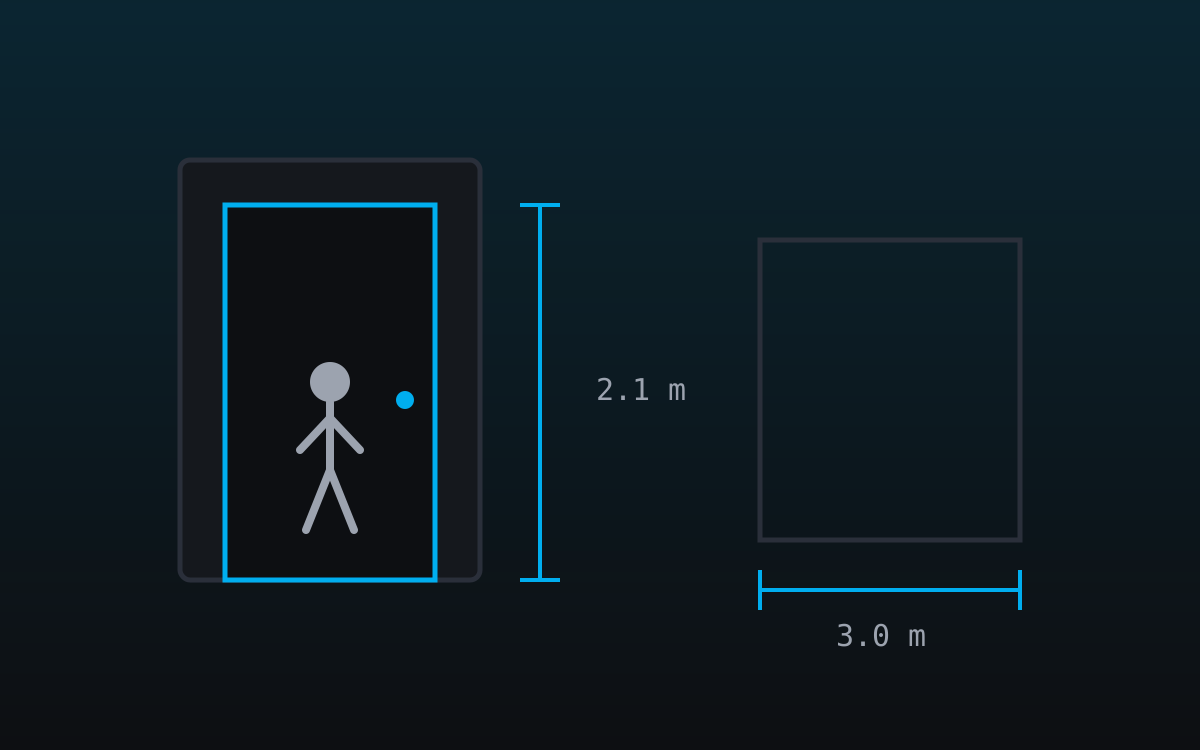
The level design scale cheat sheet: real-world measurements that make spaces feel right
Door widths, ceiling heights, the stair formula, corridor widths and cover heights, real architectural measurements for level designers, the game-space multipliers shipped titles use, the engine-unit trap, and a one-hour workflow to lock your own metrics.
Read article
Introducing Numivo: level design tools that feel native
Why we built a scatter, blending and measuring toolkit that lives inside Unreal Engine 5 and Unity instead of next to them.
Read article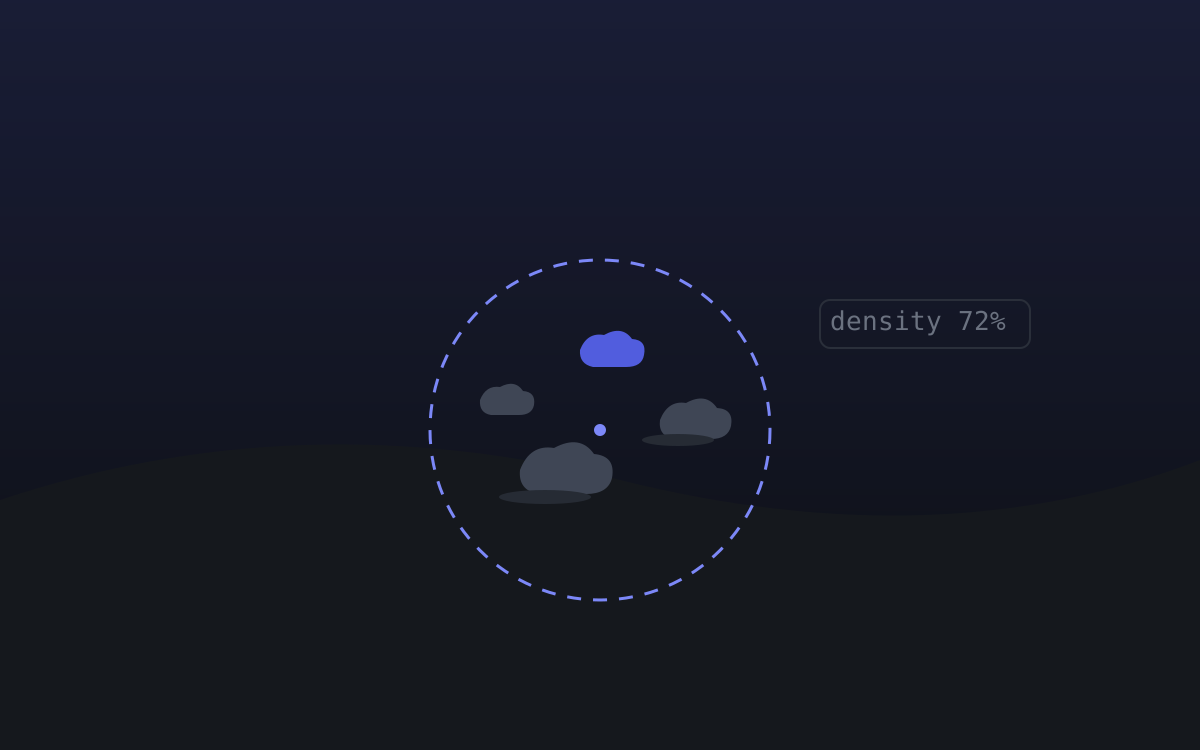
How to scatter rocks in Unreal Engine 5: fast, believable, performant
A practical UE5 scattering workflow, covering density painting, slope masks, species rules and clustering, that stays performant because everything bakes to instances.
Read article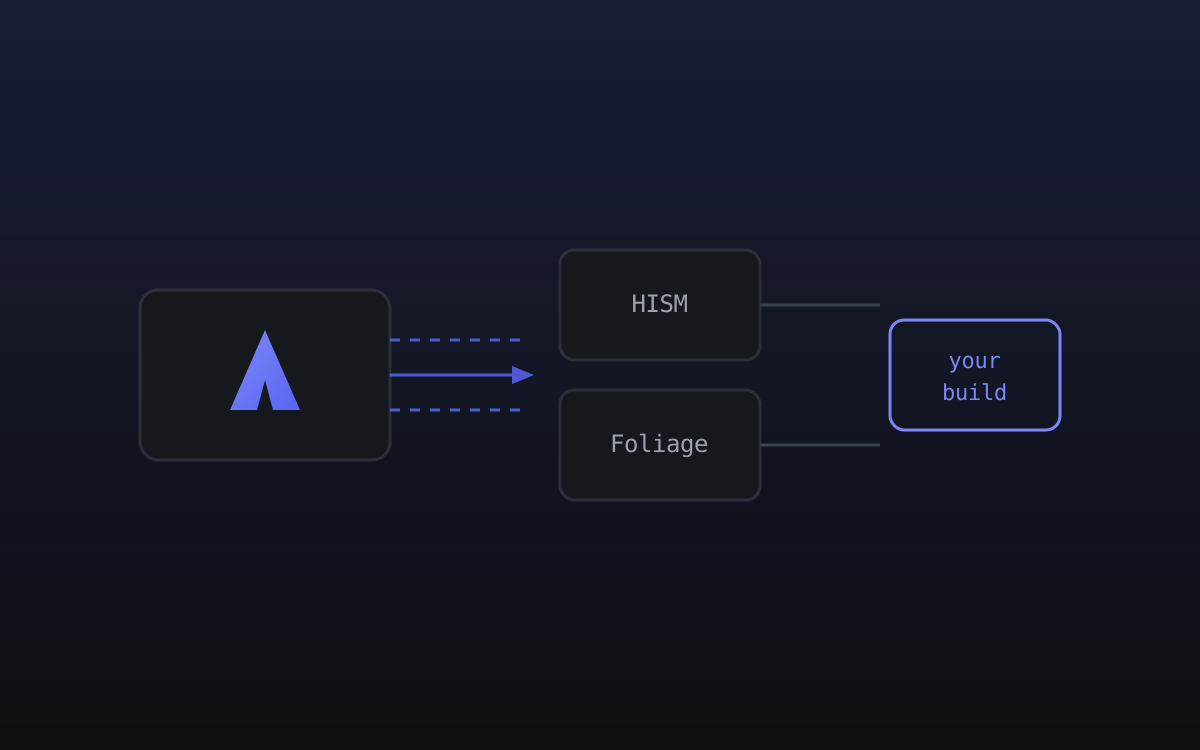
Zero runtime cost: how Numivo bakes everything to native engine assets
The architecture decision behind Numivo, why every scatter, blend and grid becomes a plain engine asset, and what that means for your builds, your repo and your team.
Read article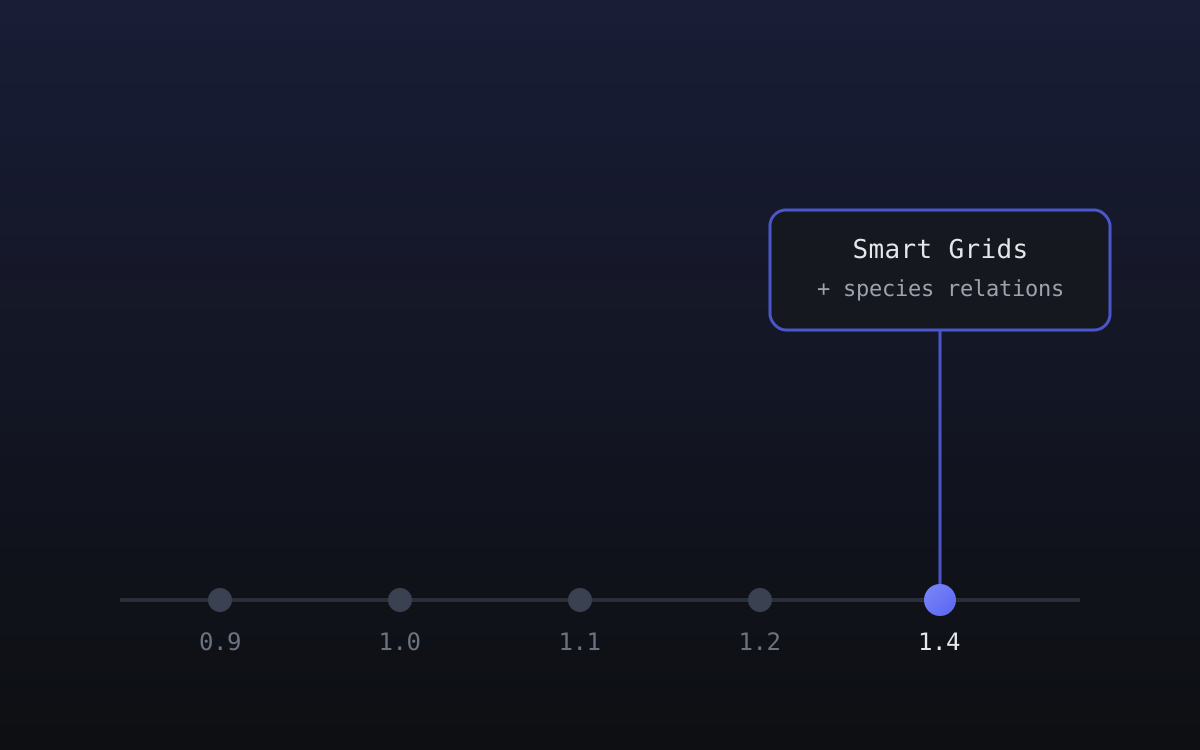
From beta to v1.4: everything that shipped this year
A tour through Numivo's release history, covering Smart Grids, species relations, the 1M-asset content browser, and the small fixes that made daily work smoother.
Read articleProduct Updates
View all »Water that behaves: a first look at Numivo Water
A first look at Numivo Water for Unreal Engine, covering film-quality ocean, lakes, underwater and caves judged against reference photographs, physically based light and foam, and Drop-a-Mesh buoyancy that floats or sinks any object with zero setup.
Read articleIntroducing Numivo: level design tools that feel native
Why we built a scatter, blending and measuring toolkit that lives inside Unreal Engine 5 and Unity instead of next to them.
Read articleFrom beta to v1.4: everything that shipped this year
A tour through Numivo's release history, covering Smart Grids, species relations, the 1M-asset content browser, and the small fixes that made daily work smoother.
Read articleTutorials
View all »How to stand out as a human artist when AI can make 'good enough'
A practical guide to differentiating yourself as an artist in the age of generative AI, covering developing a point of view, mastering intention and craft, building a body of coherent work, and leaning into the specifically human qualities that 'good enough' output can never reach.
Read articleThe real risks of AI for game artists, and how to stay indispensable in 2026
An honest look at what AI actually threatens in game art careers, what it doesn't, the legal and quality traps, and a concrete plan for staying indispensable by leaning into judgement, direction and the human skills that generated content can't replace.
Read articleHow to get hired as an animator in 2026: skills, reel and standing out
A practical guide to landing an animation job in games or film in 2026, covering the fundamentals that still decide everything, the reel that gets interviews, how AI capture and procedural systems change what animators do, and how to stand out when tools can generate motion.
Read articleHow to stand out as a human artist when AI can make 'good enough'
A practical guide to differentiating yourself as an artist in the age of generative AI, covering developing a point of view, mastering intention and craft, building a body of coherent work, and leaning into the specifically human qualities that 'good enough' output can never reach.
Read articleThe real risks of AI for game artists, and how to stay indispensable in 2026
An honest look at what AI actually threatens in game art careers, what it doesn't, the legal and quality traps, and a concrete plan for staying indispensable by leaning into judgement, direction and the human skills that generated content can't replace.
Read articleHow to get hired as an animator in 2026: skills, reel and standing out
A practical guide to landing an animation job in games or film in 2026, covering the fundamentals that still decide everything, the reel that gets interviews, how AI capture and procedural systems change what animators do, and how to stand out when tools can generate motion.
Read articleHow to break into film and VFX as an environment artist in 2026
A practical guide to entering the film and VFX industry as an environment or matte/set artist in 2026: how film hiring differs from games, the reel that gets you noticed, the pipeline skills that matter, real-time's growing role, and how to position yourself.
Read articleHow to land a games-industry job as an environment or level artist in 2026
A practical, honest guide to breaking into the games industry in environment and level art in 2026: what studios actually hire for, the portfolio that gets interviews, the skills in demand, networking that works, and how to stand out in a competitive market.
Read articleLevel design fundamentals that never go out of style
The durable principles behind every good level, regardless of engine, genre or year, covering pacing and rhythm, readability and guidance, risk and reward, meaningful choice, and the loop of intention and playtesting, with why each one outlasts every tool and trend.
Read articleThe level design trends shaping 2026, and which ones actually matter
A clear-eyed look at the level and environment design trends defining 2026, covering procedural and AI-assisted content, virtualized geometry and captured environments, systemic and reactive spaces, accessibility-first design, and how to adopt what's substance without chasing hype.
Read articleAI tools every environment artist should actually use in 2026
A grounded rundown of where AI genuinely helps environment and level artists in 2026, covering texturing, upscaling, retopology, tagging and search, reference and ideation, plus the honest limits and a workflow that uses AI as an accelerator without letting it flatten your work.
Read articleThe level artist's 2026 toolkit: what to actually learn this year
A grounded map of the skills and tools a level and environment artist should prioritise in 2026, covering the durable fundamentals, the software worth your time, the newer tech worth watching, and how to sequence learning so you build real capability instead of tutorial hell.
Read articleNanite and mesh shaders: how virtualized geometry actually works
A plain-language explanation of Nanite-style virtualized geometry and mesh shaders, covering why traditional LODs and the old vertex pipeline hit limits, how streaming clusters of triangles at pixel-scale detail works, and what it changes (and doesn't) for environment artists.
Read articleVirtual Shadow Maps and GPU-driven rendering, explained for artists
A plain-language explanation of Virtual Shadow Maps and GPU-driven rendering, covering why traditional shadow maps and CPU-submitted draw calls hit walls, how the modern approach fixes them, and what it means for how you build and budget environments.
Read articleBlender to Unreal and Unity in 2026: smooth live-link workflows
A practical guide to moving assets from Blender into Unreal Engine and Unity without pain, covering the transform and scale gotchas, material expectations, live-link/send-to-engine tools, collision and LOD setup, and how to build a round-trip that doesn't fight you.
Read articleProcedural and physics-based animation for games in 2026
A practical primer on procedural and physics-driven animation, covering motion matching, ragdoll and active ragdoll, procedural secondary motion and foot IK, and how to blend authored keyframes with runtime systems so characters react believably without exploding your animation budget.
Read articleAuto-retopology and auto-UV in 2026: when to trust the button
An honest look at automatic retopology and UV tools for game artists, covering how good they've actually got, where they save hours, where they still fail (deforming characters, hard-surface, seams), and a practical hybrid workflow that uses them without regret.
Read articleReal-time hair and fur grooming for games in 2026: strands vs. cards
A practical guide to real-time hair and fur for games, covering how strand-based grooming and hair cards differ, the performance trade-offs, LODing strands to cards, grooming workflow basics, and when each approach is the right call.
Read articleSubstance smart materials in 2026: texturing that adapts to any mesh
A practical guide to smart materials and procedural texturing in Substance, covering what makes a material 'smart', how mesh maps drive wear and dirt automatically, building reusable material libraries, and where procedural texturing beats hand-painting.
Read articlePhotogrammetry in 2026: from phone scan to game-ready asset
A practical photogrammetry workflow for game artists, covering how to shoot a good capture with just a phone, clean and retopologise the raw scan, bake detail to a game mesh, delight textures, and know where scanning beats modelling.
Read articleHoudini for indie environment artists: is it worth the climb?
An honest guide to Houdini for solo and small-team environment artists, covering what procedural really buys you, the steep learning curve, Houdini Engine and digital assets, where it beats hand-modelling, and how to start without drowning.
Read articleGetting game-ready assets out of Maya: the 2026 checklist
A practical checklist for exporting clean, game-ready assets from Maya, covering scale and units, freezing transforms, pivots, naming, UVs and smoothing, LODs, and the export settings that stop assets arriving broken in Unreal or Unity.
Read articleMarkerless and AI motion capture in 2026: how animators actually use it
A practical look at AI-driven markerless motion capture for animators, covering how video-to-animation works, what it's genuinely good at, where it still needs cleanup, retargeting to your rig, and how it changes an animation workflow without replacing craft.
Read articleOpenUSD for games and film in 2026: why the whole industry is standardizing on it
A clear explanation of OpenUSD for artists, covering what it is beyond a file format, layers and non-destructive composition, why studios adopt it for interchange, how it fits games versus film, and what an environment artist actually needs to know.
Read articleBlender Geometry Nodes for procedural environments: a practical starting point
A grounded introduction to Blender Geometry Nodes for environment art, covering what the node graph really does, scattering with instances, controlling randomness with seeds, driving detail with attributes, and where procedural stops and hand-work should start.
Read article3D Gaussian Splatting for game environments in 2026: what it is and where it fits
A plain-language guide to 3D Gaussian Splatting for game artists, covering how it captures photoreal scenes, why splats aren't meshes, the real problems of using them in a game engine, mesh extraction, and where the technique genuinely fits a 2026 pipeline.
Read articleReproducible scattering: seeds, determinism and version-controlling a scattered level
Why procedural scatter needs to be deterministic, covering how seeds make randomness repeatable, why baking to native instances makes a scattered level diffable and mergeable, and how to keep a team's foliage from silently changing under source control.
Read articleBuilding a reference library that actually makes you a better artist
Why reference is a skill, not cheating, covering how to gather it with intent, what to collect beyond pretty pictures (materials, scale, wear, light), how to organize it so you actually use it, and how studying reference trains the eye that makes environments believable.
Read articleDense forests without the framerate cliff: LODs, impostors and instancing
How to render thousands of trees at framerate: the LOD chain from full mesh to billboard, octahedral impostors that hold up from any angle, instancing and culling, and the wind and shading tricks that keep a baked forest from looking dead.
Read articleFrom blockout to portfolio: building an environment art portfolio that lands the job
What hiring artists and leads actually look for in an environment art portfolio, a few finished scenes over many props, breakdowns that show process, real-time in-engine work, scope discipline, and the presentation mistakes that quietly cost interviews.
Read articleMaking your game run on a potato: optimizing environments for low-end PCs and Steam Deck
A practical playbook for hitting a low frame budget without gutting your art, covering where the frame time actually goes, overdraw and foliage, draw calls and instancing, LODs and cull distances, and the fixed-camera method for finding real regressions.
Read articleVertex painting for material blending: terrain and mesh transitions without visible seams
How vertex painting blends materials to kill visible seams, using the height-blend trick that beats linear alpha, painting mud into grass and moss onto rock, performance considerations, and where it fits alongside decals and tiling textures.
Read articleHow to make a small level feel huge: the spatial tricks AAA uses
Practical techniques to make a compact game space feel vast, including distant unreachable landmarks, forced perspective, scale anchors, atmospheric depth, verticality and framing, so you get a sense of scale without the cost of building a giant map.
Read articleLighting and colour mood: how a level makes players feel something
A practical guide to lighting game environments for emotion, covering key/fill/rim thinking, colour temperature, contrast as mood, motivated light sources, and using light to guide the eye, plus the values and checks that make a space feel intentional.
Read articleTexel density done right: one standard, enforced across a whole team
What texel density is, the pixels-per-centimetre values shipped games actually use, how to measure it with a checker texture, when to break the rule for hero assets, and how to enforce one standard so a team's environment reads as a single world.
Read articleComposition for game environments: leading the eye through 3D space
How to compose game environments so players look where you want, leading lines, framing, focal points, depth cues and the squint test, adapted from photography and film for a camera the player controls.
Read articleUnreal Engine 5 vs Unity for environment art in 2026: an honest comparison
A balanced, dimension-by-dimension comparison of Unreal Engine 5 and Unity for building game environments, covering terrain, foliage, lighting, performance, licensing and learning curve, with a decision table and the questions that actually settle the choice.
Read articleTaming a 100,000-asset library before it tames you
Naming conventions that sort themselves, folders versus tags, thumbnail pipelines, the duplicate policy and opportunistic migration, all part of a practical system for keeping a huge game asset library findable, and why search speed decides how varied your levels look.
Read articlePerformance budgets for environment art: numbers before beauty
How to set a performance budget for environment scenes: frame-time slices per system, draw call and memory ceilings, the three-camera measurement method, the review cadence, and the lever order to pull when a scene goes over.
Read articleDense foliage without the frame-rate bill: a practical guide
How to fill a scene with vegetation and keep it fast, instancing, cull distances, LOD strategy, shadow costs, overdraw, density placement and the fixed-camera profiling loop that proves each optimization actually paid off.
Read articleModular kits that don't look modular: grid discipline, pivots and variation
How to design a modular environment kit, covering how to choose a grid and story height, the pivot convention that makes pieces snap, a 12-piece starter list, the variation techniques that hide repetition, and the non-square layouts that need tooling.
Read articleGuiding players without arrows: light, lines and landmarks
How level designers steer players without quest markers, covering the signal hierarchy from light to landmarks, composing the first frame of every space, landmark systems, breadcrumb chains, density steering and the playtest method that verifies it all.
Read articleEnvironmental storytelling that players actually read
Most environmental storytelling goes unnoticed. What players register in a two-second glance, the before-then-event dressing method, cause-and-effect proximity, lighting the key prop, and a worked example you can copy.
Read articleWhy your scattered vegetation looks fake, and the five rules that fix it
Random scatter is not how nature works. Clustering, attract/avoid species relationships, edge gradients, structured size variation, and terrain logic form five rules that turn procedural placement into a believable ecosystem, with the numbers that make each one work.
Read articleThe Unreal Engine plugins worth installing in 2026: eleven that earn their slot
A short, honest list of Unreal Engine plugins that pull their weight in 2026, including MetaHuman, Datasmith, Niagara, Ultra Dynamic Sky, SpeedTree, Substance, Worldscape, EasyFog and more, with a plain test for whether a plugin belongs in your project.
Read articleLevel design tools that actually matter: the stack behind a finished space
A practical guide to the level design toolset, covering picking an engine, blockout and greybox tools, modelling and texturing, scatter and vegetation, measurement, and asset management, plus which tools are worth adding and which are just noise.
Read articleFrom greybox to gold: the pass order that keeps environments on schedule
The proven five-pass sequence for building game environments (blockout, macro, structure, set dressing, polish), with exit criteria, time budgets per pass, the vertical-slice trick, and the failure pattern each pass exists to prevent.
Read articleWater that behaves: a first look at Numivo Water
A first look at Numivo Water for Unreal Engine, covering film-quality ocean, lakes, underwater and caves judged against reference photographs, physically based light and foam, and Drop-a-Mesh buoyancy that floats or sinks any object with zero setup.
Read articleDesigning playable water: depth, edges and the rules players learn
Water in games is a design material, not a backdrop: how color and motion encode depth and danger, why shorelines are composition lines, water as a pacing tool, cave and underwater spaces, and the consistency contract that keeps players trusting every pool.
Read articleThe level design scale cheat sheet: real-world measurements that make spaces feel right
Door widths, ceiling heights, the stair formula, corridor widths and cover heights, real architectural measurements for level designers, the game-space multipliers shipped titles use, the engine-unit trap, and a one-hour workflow to lock your own metrics.
Read articleIntroducing Numivo: level design tools that feel native
Why we built a scatter, blending and measuring toolkit that lives inside Unreal Engine 5 and Unity instead of next to them.
Read articleHow to scatter rocks in Unreal Engine 5: fast, believable, performant
A practical UE5 scattering workflow, covering density painting, slope masks, species rules and clustering, that stays performant because everything bakes to instances.
Read articleZero runtime cost: how Numivo bakes everything to native engine assets
The architecture decision behind Numivo, why every scatter, blend and grid becomes a plain engine asset, and what that means for your builds, your repo and your team.
Read articleFrom beta to v1.4: everything that shipped this year
A tour through Numivo's release history, covering Smart Grids, species relations, the 1M-asset content browser, and the small fixes that made daily work smoother.
Read articleNo matching articles — try a different term.