In short: An environment art portfolio gets you hired on a few strong, finished, real-time scenes, not on a big pile of half-done props. Reviewers spend seconds per piece, look for finished-ness, composition and process, and quietly reject the common mistakes: scope creep, no breakdowns, offline renders passed off as in-engine, and messy presentation.
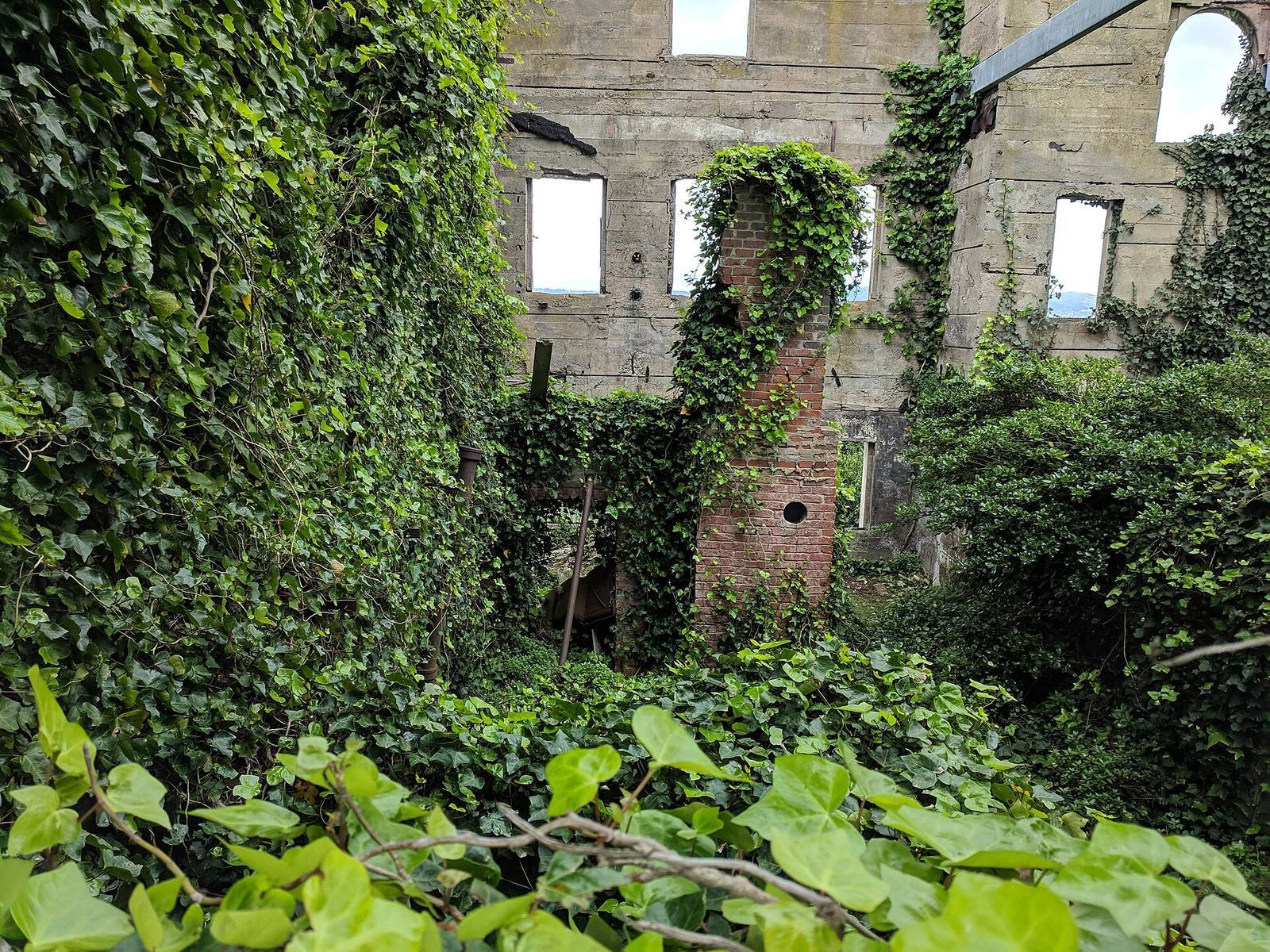 A single scene like this, composed, finished, atmospheric, and clearly telling a story, does more for a portfolio than a folder of forty disconnected props. Reviewers hire the artist who can take one space all the way.
What reviewers actually look for
A few FINISHED, cohesive scenes that show composition, believable materials, good lighting and a clear sense of place, plus evidence you understand real-time constraints. Quality and finish beat quantity every time.
Hiring artists and leads look at a lot of portfolios, fast, and they're pattern- matching for a small number of signals: can this person take a scene all the way to a finished, art-directed state; do they understand composition and lighting; are their materials believable; and can they work within real-time constraints. Three or four scenes that hit those marks beat thirty props that don't, because a finished scene demonstrates the whole skill (layout, dressing, lighting, optimization, presentation) while a prop demonstrates only modelling. Depth of finish reads as "ready to contribute"; breadth of unfinished work reads as "still learning."
Scope: finish beats ambition
Pick pieces small enough to finish to a high standard. A modest scene taken to gold outshines an ambitious one abandoned at 70%. Reviewers can always tell the difference, and unfinished ambition reads as a red flag.
The most common portfolio killer is scope. A grand city district or a sprawling dungeon sounds impressive, but if it stalls at greybox-plus-textures it actively hurts you: it signals someone who can't judge scope or carry a piece to completion, which is exactly the risk a lead is screening for. A small, completely-resolved space, one room, one corner of a world, one focused vista, proves you can finish, and finishing is the professional skill. Choose pieces you can take all the way in the time you have, then take them all the way. Ambition you can't deliver is worse than modest work you can.
Show your process
Include breakdowns: blockout, wireframe, texture/material flats, lighting passes, references. Reviewers want to see HOW you got there, because it proves the final image wasn't a fluke and shows how you think.
A polished final beauty shot is necessary but not sufficient; reviewers also want the breakdown, because process reveals competence a single render can't. Show the blockout you started from, a wireframe or clay render, your material and texture work, the lighting progression, and the reference you worked against. This does two jobs: it proves you understand the pipeline rather than getting lucky, and it lets a reviewer see your thinking: your scale discipline, your composition decisions, your optimization. Following a clear pass order (blockout, structure, dressing, lighting, polish) and showing those stages tells a lead you'll be productive on day one, not just that you can make one nice picture.
 One well-realized element, fully finished and thoughtfully lit, communicates craft. A portfolio is a sequence of these: focused pieces that each prove you can take something all the way.
Make it real-time and in-engine
Environment art is a real-time craft, so present work IN the engine: screenshots or captures from Unreal or Unity, at playable framerates. Offline-rendered "environments" don't prove you can hit a game's constraints.
For a games role, the work must be real-time. A gorgeous offline render doesn't demonstrate the thing the job actually requires: building beauty within a frame budget, and experienced reviewers spot the difference immediately. Present your scenes as in-engine captures, ideally with a short fly-through so it's clearly running, and don't be shy about including the performance story: draw calls, a budget-camera framerate, the LOD and instancing choices you made. Showing that you can hit a target and look good is often more persuasive than the beauty shot alone, because it answers the reviewer's real question: can you do this under production constraints.
Presentation and the quiet rejections
Consistent, well-lit hero shots; a clean layout; the strongest piece first; and cohesion across the portfolio. Sloppy presentation, a weak lead image, or wild inconsistency get portfolios closed in seconds.
Presentation is judged whether you intend it or not, and it's where good work quietly loses interviews. Lead with your single strongest piece: reviewers decide fast, so never bury the best shot. Keep hero shots consistent in framing and quality, lay the page out cleanly, and make the overall body of work feel cohesive rather than scattered across a dozen unrelated styles. A portfolio that looks considered signals an artist who is considered; a strong scene wrapped in messy presentation reads as weaker than it is. The bar is not graphic-design mastery. What matters is care, consistency, and putting your best foot first.
Field numbers worth stealing
- Portfolio size: 3–5 finished scenes beats dozens of unfinished props
- Reviewer time per piece: seconds, so lead with your strongest shot
- Always include breakdowns: blockout, wireframe, materials, lighting, reference
- Present in-engine at real-time: offline renders don't prove the job's skill
- The silent killer: scope creep (a finished small scene beats an abandoned big one)
Mini-FAQ
How many pieces should I show? Three to five strong, finished scenes. If a piece isn't finished to a high standard, cut it, since a weak entry drags down the average and the reviewer's impression. Quality sets your ceiling; a weak piece sets your floor.
Should I show personal work or recreations? Both are fine; what matters is finish and process. Recreating a scene from a shipped game is a legitimate study piece if you show your breakdown and credit the original, just don't present it as wholly your own concept.
Do I need a fully playable level, or are stills enough? Strong in-engine stills plus a short fly-through are enough for most environment-art roles. A playable slice is a bonus that leans toward level-design roles. Clarity that it's real-time matters more than interactivity.
My work is good but I get no responses, why? Often presentation, scope signals, or a weak lead image, not the art itself. Put your best piece first, cut the unfinished ones, add breakdowns, and make sure everything reads as in-engine. The same work, better framed, gets very different results.
Hiring is a bet that you can take a space all the way, under constraints, and communicate how you did it. Show a few finished, real-time scenes; lead with your best; prove your process; and present it with care, and your portfolio will make that bet an easy one.