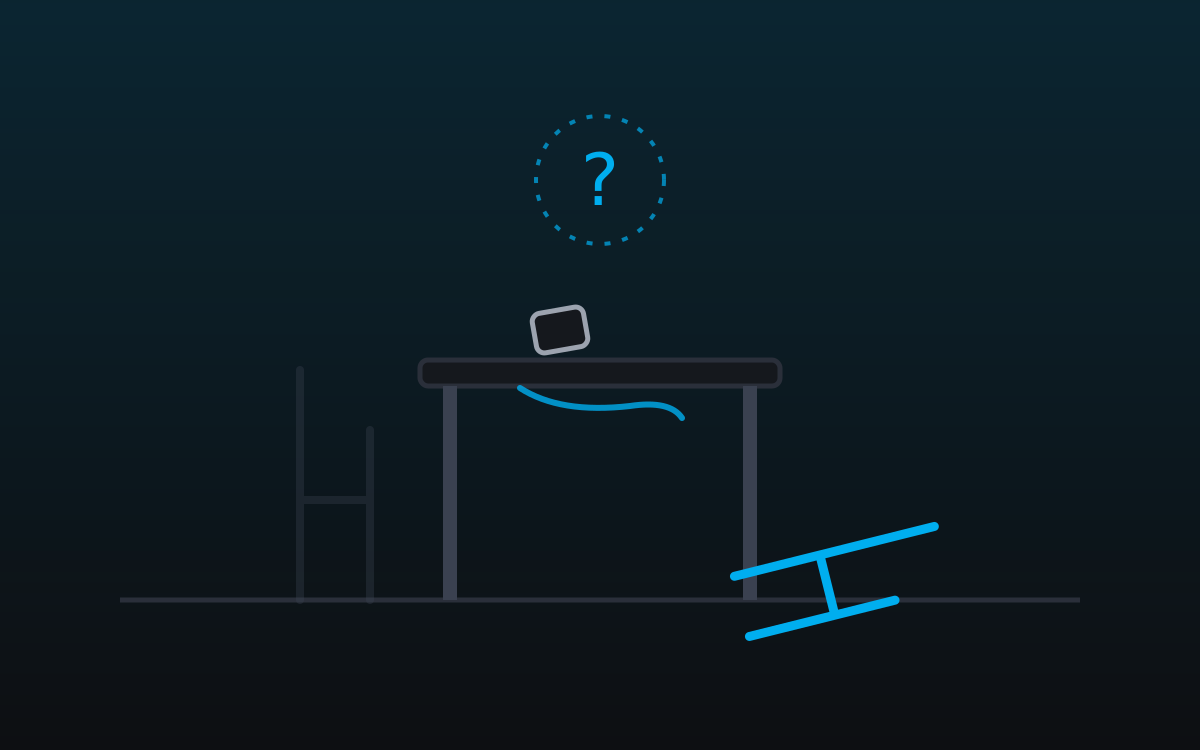
In short: Players read environments in about two seconds, in one pass, while moving. Storytelling that survives those conditions follows hard rules: one event per scene, evidence of change from a normal state, cause and effect placed close enough to touch, and the key prop lit so the first glance lands on it.
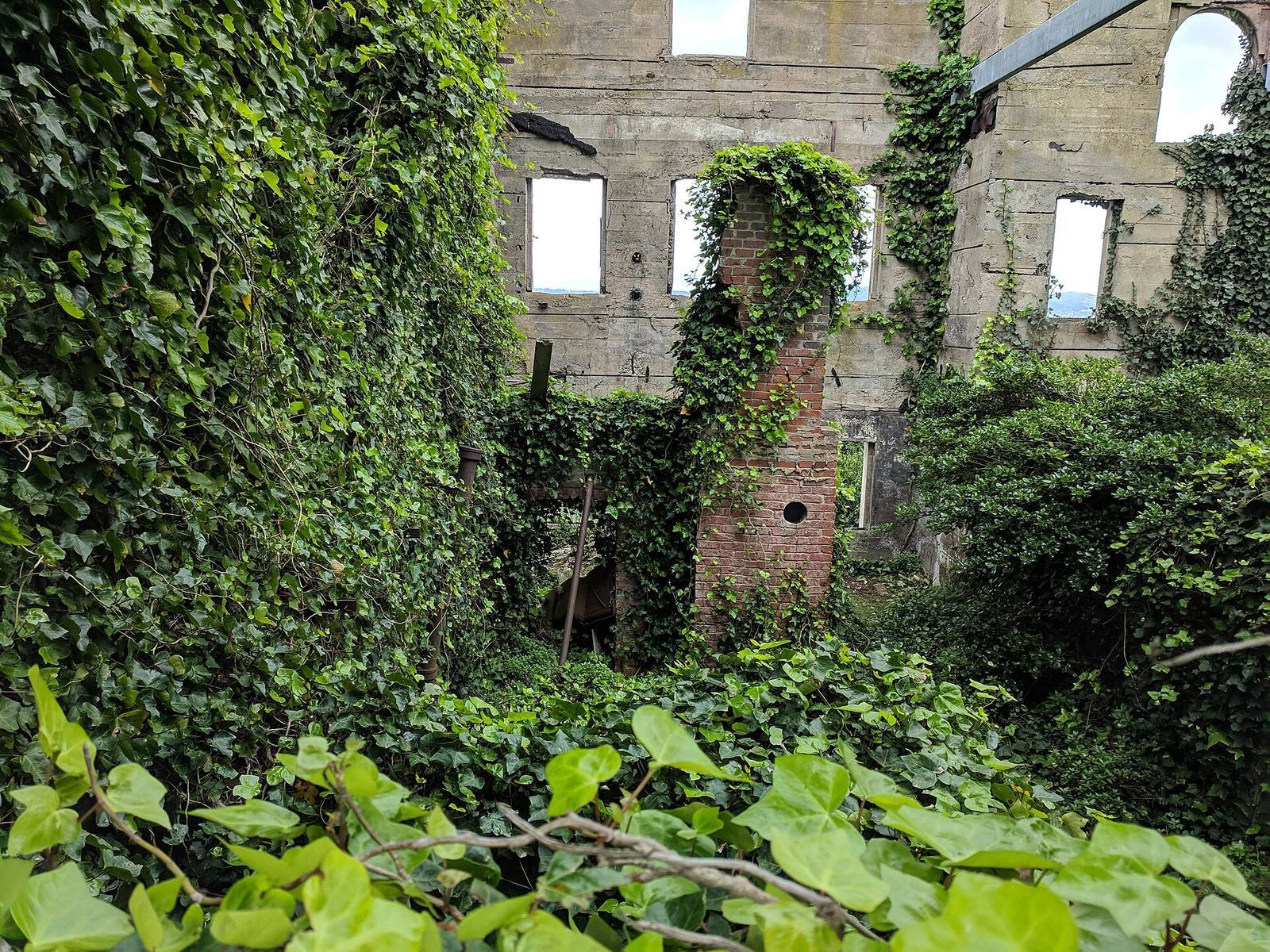 Nobody needs a journal entry to read this room: people built here, people left, and the forest is taking it back. That's a complete story told entirely in set dressing: the standard your scenes compete against.
Decoration answers "where", story answers "what happened"
A desk with papers and a lamp says "office": that's decoration. A desk with one drawer yanked out, papers dumped, and a single missing photo frame says "someone searched this in a hurry and took one specific thing": that's story.
The test for every scene you dress: can a player walking through at normal speed answer what happened here? If they can only answer where am I, you've decorated. Both have value (you need "where" scenes to establish place), but only one of them is worth the extra authoring hours, and knowing which you're doing keeps the schedule honest. Most levels need far more "where" than "what"; reserve the labor-intensive storytelling for the moments that carry weight.
One event per scene
Pick one event, choose the three to five props that are its evidence, and delete everything that contradicts it. A scene with four meaningful objects beats a scene with twelve.
The most common failure is ambition: a room that shows a struggle and a ritual and an escape reads as visual noise, because players don't inventory rooms, they sample them. The discipline scales down beautifully: even a single tipped chair in an otherwise orderly room is a complete story with a beginning (order), a middle (someone stood up fast) and an implied end (they left). It scales up badly: every additional narrative thread halves the chance any of them lands.
If a space genuinely needs two stories, the battle and the looting that followed, separate them in space. One event per room, or one per clearly divided corner, so that each sample the player takes is internally coherent. Two stories fighting for the same three seconds produce zero stories.
Change is the story
Story lives in the delta between how things should be and how they are, so dress twice. First the "before": the normal state of this place. Then the event, disturbed on top of it.
Players carry a deep, unconscious intuition for "normal": chairs pushed in, plates shelved, tools racked, doors closed. Their eyes snag on every violation of that norm automatically, which means violations are a currency you spend deliberately, not scatter randomly. A scene dressed only with the event (skip the "before") floats in abstraction, because there's no baseline to read the change against; a scene dressed only with normalcy says nothing at all.
The two-layer method also splits the work rationally, which is why it survives production. The base layer is systematic: shelf clutter, ground litter, the furniture grammar of the room type, and can be placed fast, even procedurally. The event layer is authored, prop by prop, and gets the human attention. Build the normal state fast with scattering and grid tools (ground layers, shelf rows, crate stacks, workflows Numivo automates), then spend the saved hours where tools can't help: choosing the event and arranging its evidence by hand.
Cause and effect must touch
Players connect objects that are close together and visibly related: the overturned lantern NEXT TO the burn mark, the rope OVER the railing. Separate cause and effect by four meters and the connection dies.
Composition is doing narrative grammar here. The reliable patterns, roughly in order of strength:
- Trail: drops, drag marks or footprints physically connect A to B. The strongest pattern, because it moves the player through the story in order: they follow the trail and experience beginning-to-end.
- Contact: the effect physically touches its cause: scorch directly under the lantern, water pooled under the leak. Unambiguous.
- Pointing: a fallen ladder aims at the open hatch it once reached; a toppled signpost points where it fell from.
- Absence: the clean rectangle on a dusty wall where a painting hung, the empty rack among full ones. Advanced storytelling: cheap to build, devastating when read, because the player's mind supplies what's missing.
The four-meter rule is not arbitrary: beyond roughly that distance, the two objects fall into separate glances, and the player never holds cause and effect in the same mental frame. Keep them in one look, or bridge them with a trail.
Guide the eye, then reward it
Light the key prop, frame it with the doorway, point a fallen beam at it. The first glance should land on the WHAT; the second glance finds the WHY.
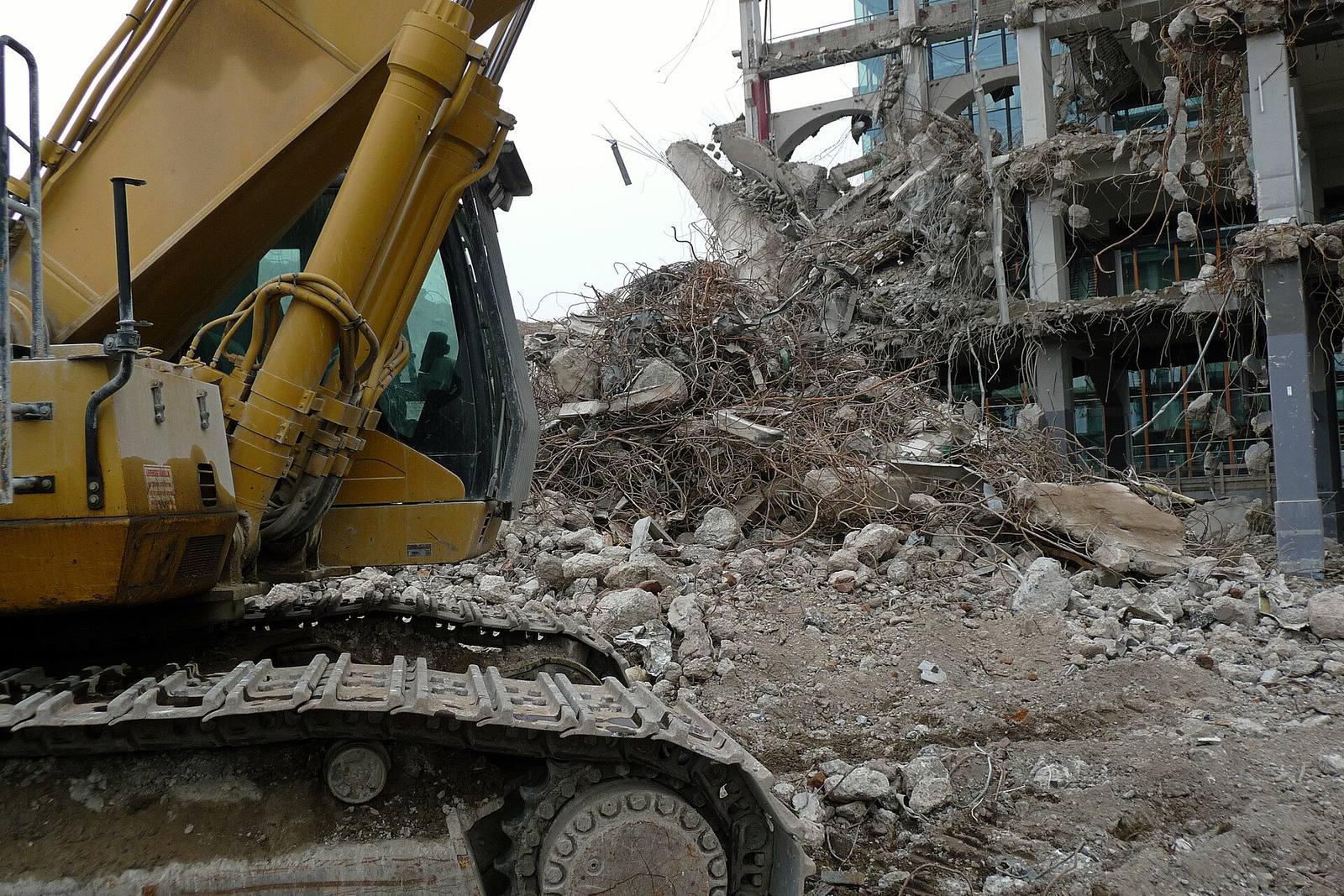 Destruction is storytelling too, but only if the player's eye lands on the telling detail. A collapse reads as chaos until composition and light single out the one beam, the one crack, the one thing that says how it happened.
Storytelling scenes fail in playtests overwhelmingly for one banal reason: the key object was never seen. The fixes are lighting and composition, not more props. A 20–30 % brightness pool on the tipped chair outperforms three additional clue objects, because a fourth clue nobody looks at adds nothing. And put the scene where the walk path faces it: a story arranged behind the player's entry direction plays to an empty theater. Sightline first, then props.
A worked example
A guard post the player passes in about eight seconds.
- Base layer (systematic, fast): a brazier, two stools, a weapon rack with three spears, bowls on a crate, a bedroll in the corner. This says "guards live here", the normal state.
- Event layer (authored, four props): one stool tipped, one spear missing from the rack, a bowl still steaming, the door ajar.
Read: someone left seconds ago, armed, in a hurry. Total authored props: four. Player time to read: under two seconds. Tension achieved before a single enemy appears: the player now expects a fight and scans for it, which is exactly the anticipation you wanted, delivered by set dressing instead of a cutscene. Note how each authored prop is a change to a base-layer object: the stool was upright, the rack was full, the bowl was for eating, the door was shut. The event is legible only because the base established the norm.
Field numbers worth stealing
- Player reading time per scene: ~2 seconds, one pass, while moving
- Authored evidence props per event: 3–5, a hard maximum
- Cause-to-effect distance: under ~4 m (ideally ~2), or bridge with a trail
- Brightness bump that reliably draws first glance: ~20–30 % over ambient
- Ratio of "where" scenes to "what happened" scenes in a typical level: high, reserve authored storytelling for moments that matter
Mini-FAQ
Do players even care? The majority won't consciously notice any single scene, and still rate dressed levels as "more alive" in tests. Environmental storytelling works mostly below awareness; that's its power, not its failure. You're building an atmosphere the player feels, not a puzzle they solve.
How does this interact with readable gameplay? Storytelling density belongs in safe spaces: approaches, aftermaths, interiors between fights. During combat, silhouettes must win: a corpse arranged mid-arena reads as loot or threat, not narrative, and competes with the information the player needs to survive.
Text or no text? Notes and audio logs are additional channels, not the foundation. The strongest scenes work wordlessly and use text only to deepen what the props already said. If removing the note breaks the story, the scene wasn't telling it. The note was.
How much should I leave ambiguous? More than feels comfortable. Players enjoy being the detective; a scene that spells out every detail robs them of the deduction. Give enough for a confident read of what happened and let why stay open, because the imagination fills better than any prop.
Dress the base. Break it with one event. Light the break, place cause beside effect, and let the player be the detective. That's the entire craft, and it fits any engine and any art style.