In short: Virtualized geometry, with Nanite being the best-known name, lets a scene render film-quality meshes with millions of triangles each, streaming exactly the detail each pixel needs and largely retiring manual LODs. Underneath, it leans on a newer GPU capability (mesh shaders) that rethinks how geometry reaches the screen.
 Virtualized geometry is a rethink of how meshes reach the screen, built on newer GPU capabilities. The result: import a film-grade asset and the engine figures out how much of it to actually draw, per pixel.
The old geometry limits
The traditional GPU pipeline processes every vertex you submit, so high-poly meshes are expensive, which forced artists to build LODs by hand and keep triangle counts down. Detail was capped by what the vertex pipeline could chew through each frame.
For decades the GPU's front end processed geometry vertex-by-vertex through a fixed pipeline, so more triangles meant more cost, linearly. That capped how detailed a scene could be and forced two lifelong artist chores: keeping triangle counts within budget, and building LODs (several reduced versions of every mesh) so distant copies didn't cost full price. It worked, but it meant hand-authoring LOD chains for thousands of assets, baking million-poly sculpts down to low-poly game meshes, and constantly policing polygon budgets. The detail you could show was bounded by what the vertex pipeline could push, and a lot of an artist's time went to working around that bound.
What virtualized geometry does
It treats a mesh as clusters of triangles it can stream and swap at pixel-scale, drawing roughly one triangle per pixel regardless of the source mesh's true density. Import a 10-million-triangle asset and the engine only ever processes the detail the current view needs, with no hand LODs.
Virtualized geometry changes the deal: a mesh is broken into small clusters of triangles, and the engine streams and selects clusters so that on screen you get about the detail the pixels can show (roughly a triangle per pixel) no matter how dense the source is. Bring in a 10-million-triangle sculpt and the engine never draws all of it; it draws the right clusters at the right detail for where the camera is, continuously and seamlessly. That does two remarkable things: it lets you use film-quality source meshes directly, and it makes traditional per-asset LODs largely unnecessary, because the system is doing continuous LOD at the cluster level automatically.
Mesh shaders: the enabling tech
Mesh shaders are a newer, more flexible GPU stage that replaces the rigid old vertex pipeline. They let the GPU process geometry in programmable batches (like the clusters virtualized geometry uses) and cull unseen triangles early, the foundation that makes cluster-based rendering efficient.
Under the hood, this leans on mesh shaders, a modern replacement for the old fixed vertex/geometry stages. Instead of a rigid per-vertex flow, mesh shaders let the GPU work on geometry in flexible, programmable batches, a natural fit for the clusters virtualized geometry uses, and cull triangles that won't be seen much earlier and more cheaply than before. You don't program mesh shaders as an artist, but they're the reason cluster-based, pixel-scale geometry is efficient rather than theoretical. They're the plumbing that turns "stream exactly the triangles we need" from an idea into something that runs at framerate.
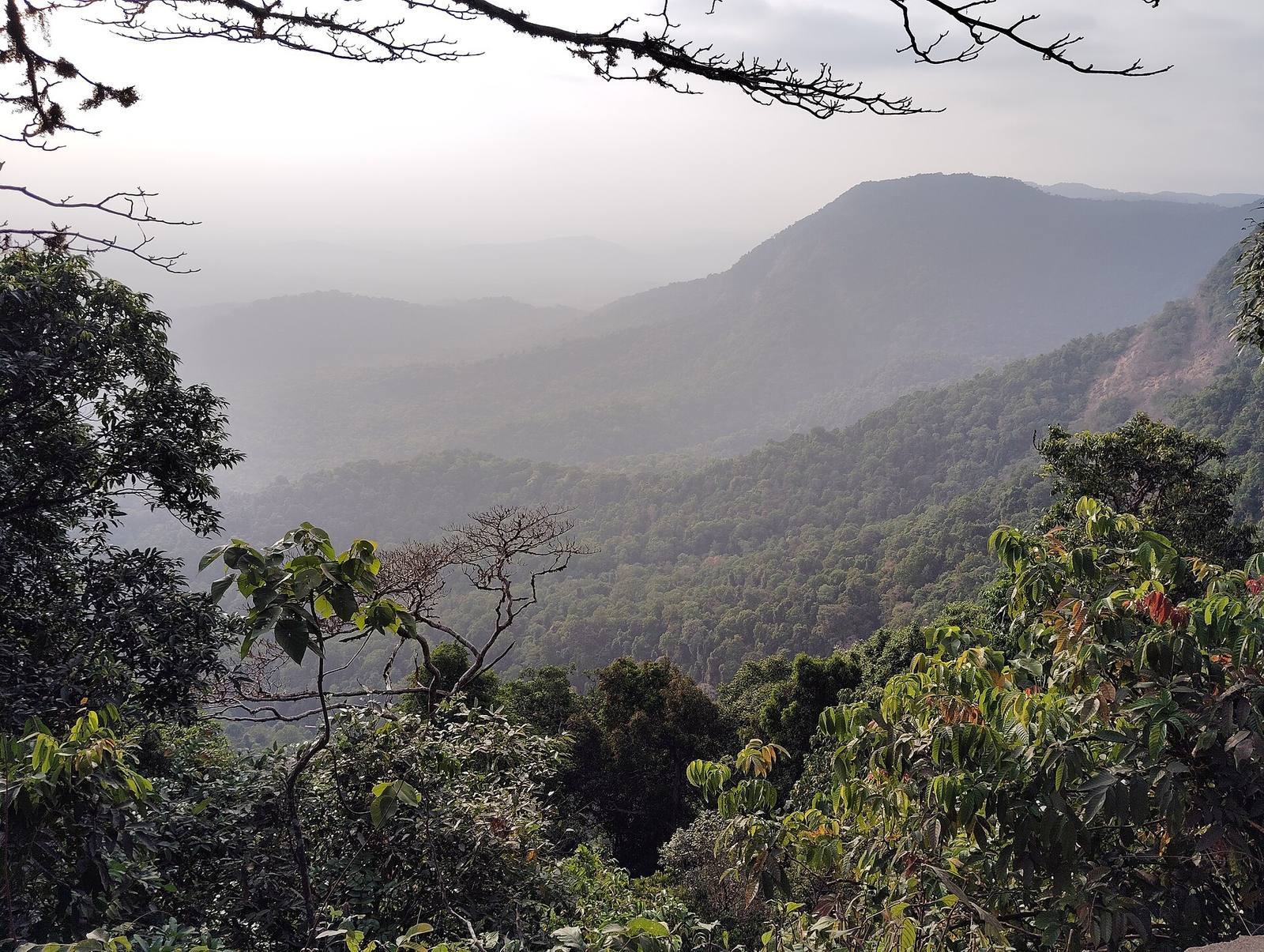 Every rock, ridge and outcrop at high source detail, drawn at exactly the density the view needs: that's the promise. But some things (transparency, deforming meshes) still live outside it, so it's a powerful tool, not a universal one.
What it changes for artists
You can import high-poly sculpts and scans directly, often skip manual LOD authoring and normal-map baking for opaque static meshes, and stop policing triangle counts as tightly. Environment detail goes way up while some traditional busywork goes away.
The day-to-day changes are real. You can bring high-poly sculpts and scans straight in, without the ritual of baking to a low-poly game mesh for opaque static geometry. You often skip hand-authoring LODs, because the system LODs continuously. And you stop obsessing over triangle counts for that geometry, freeing you to add detail that used to be impossible. For environment artists this is liberating: rocks, statues, architecture and scanned assets at their full detail, less baking and LOD grunt-work, richer scenes. A lot of the "optimize the geometry" chore migrates from the artist to the engine.
What it doesn't fix
It's mainly for opaque, static (or rigid) meshes. Transparency, foliage cards, and deforming/skinned characters often fall outside it and still need the classic treatment. And it costs memory and has overhead, so it's not a free "detail everywhere" switch. Budgets still exist.
Be clear-eyed about the boundaries. Virtualized geometry is happiest with opaque, static or rigid meshes; transparency (glass, many foliage cards), skinned/deforming characters, and some effects typically fall outside it and still need LODs, hair cards, baked normals and the old care. It also isn't free: it uses memory and has its own overhead, so "make everything millions of triangles" is not the lesson. The durable habits stay: budget your worst views, handle foliage and transparency deliberately, and bake heavy systems to cheap instances, the engine-native, instanced discipline tools like Numivo are built for, which coexists with virtualized geometry rather than being replaced by it.
Field numbers worth stealing
- Old limit: the vertex pipeline processes every triangle → hand LODs + tight poly budgets
- Virtualized geometry draws ~a triangle per pixel from clusters, streaming detail to the view
- Mesh shaders = flexible, programmable GPU geometry stage that makes clusters efficient
- Wins: import high-poly directly, skip manual LODs/baking for opaque static meshes
- Boundaries: transparency, foliage cards, deforming characters still need the classic treatment; memory + budgets remain
Mini-FAQ
Does Nanite mean triangle count no longer matters? For opaque static geometry, far less, but it's not infinite, it uses memory, and transparency, foliage and characters still care. Think "much higher budget," not "no budget."
Do I still need to make LODs? For meshes the system virtualizes, largely no. For things outside it, foliage cards, skinned characters, transparent meshes, yes, LODs and baking still apply. It removes a lot of LOD work, not all of it.
Is this the same as GPU-driven rendering? Related but distinct: GPU-driven rendering is about the GPU deciding what objects to draw; virtualized geometry is about drawing each mesh at pixel-scale detail via clusters. Modern engines use both together.
Will my scanned assets work with it? Opaque static scans are an ideal case: import the high-detail mesh and let the system handle LOD. Just remember foliage, transparency and deforming assets still follow the classic pipeline.
Virtualized geometry and mesh shaders push real-time environments toward film-grade detail while retiring a lot of the LOD and baking busywork that defined the job. You don't implement them, but understanding what they do (and don't) lets you build to their strengths: high-detail opaque geometry freely, classic care for foliage, transparency and characters, and the timeless budgeting habits underneath. That's how you turn the tech into better-looking scenes instead of a memory blowout.